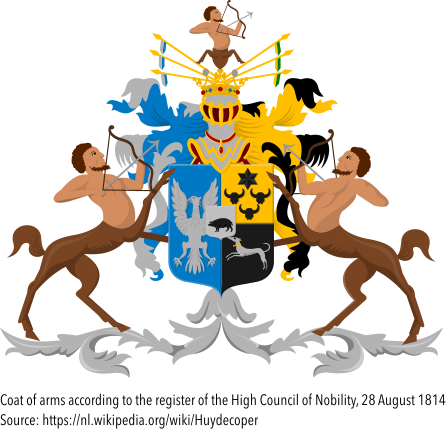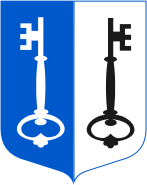
The Blue-white with Keys upwards is the Coat of Arms Nigtevecht, in Dutch "Wapen van Nigtevecht." The sample seen here is the original Coat of Arms which was for centuries in use as an added family weapon, to denote "lord of", within the coat of Arms of a nobility family. This was used for the Town Nigtevecht. It's use ended after local regions merged into a larger council area.
Based on what I found, in a still ongoing search, it seems that at first the Coat of Arms was given by the Bishops of Utrecht to the person who as Mayoral paid the taxes to the Bishops of Utrecht for the selling of peat to most likely Amsterdam. Most likely there was an early nobility family involved. I have not yet found a confirmed history of this, though I'm told there was one before certain power over the area was acquired by the Huydecoper family somewhere between 1200 and 1400.
"From the middle of the 12th century onwards the descendants of the mayors provided themselves with a second name, mostly referring to a location (Van Abcoude, Van Amstel, Van Loenersloot, Van Maarssen) "www.cambridge.org page 9 so this must have included "Van Nigtevecht" but is not recorded. Maybe the use of coloured flags was already in use as identifiers, then used as their banner when they claimed more authority.
At around 1500 it must have been a knighthood. It was the time of the Ministeriales which were originally unfree servicemen (dienstmannen) of the diocese of the Bishops of Utrecht, they acted as estate supervisors, military horsemen, and local entrepreneurs. The where serfs, had no freedom at all. Overtime they managed to tear down the chains gaining more freedom, and yet then lost it to greater powers.
Since there was no surname for non-nobility, it was a person with a first name who was then known with a functional name like "Cornelius the tax payer of Nigtevecht" as mayoral and later became a lower knighthood. The use became similar to within the nobility denoting names. Overtime it must have become a custom to use a name like "Cornelius of Nigtevecht", while the mayoral tasks disappeared. The name stuck, not "job title". There was also a bailiff controlling the area and someone who observed the work serfs had to complete. This must have merged somehow in a position of greater powers over the population. The mayoral function, bailiff an knighthood, passed on to the nobility somewhere between 1400 and 1600. It was by this time most likely a different nobility family after which it was acquired by the Huydecoper family.
After Spain lost control over the Dutch areas in the 1500's, the Bishops of Utrecht, subjected to the Spanish power and Rome, lost the rights to raise taxes in the northern areas. The powers over the areas above the river Rhine and to the West, became Princely and later the Royal powers (known as the 7 Provinces). Searches on the web gave confusing results, Even AI gave some mixed up results due to the name similarities and marriages within the same family having the same first-last names and titles. It took a bit of retrying and then a more likely result could be deducted based on articles found.
The origin of the Coat of Arms Nigtevecht goes back to the time of the "Bischops of Utrecht" which explains the position of the upwards keys. I saw in the 90's a document showing downward keys as an older format, but that document is lost and recent search showed nothing. It may have been an unreliable source. The origin of the coat of arms colours are not well documented. The may have existed as old flags, used by local powers, which then became the shields.
I made an overview of what overtime happened with the Coat of Arms Nigtevecht in connection with the Huydecoper famliy history. But I omit the detailed ancestry line as this is less relevant to tracing Coat of Arms. The overview, the whole article, is based on what I was able to find, and surely this is not complete or without error. If anyone know sources with information to improve this, then let me know.
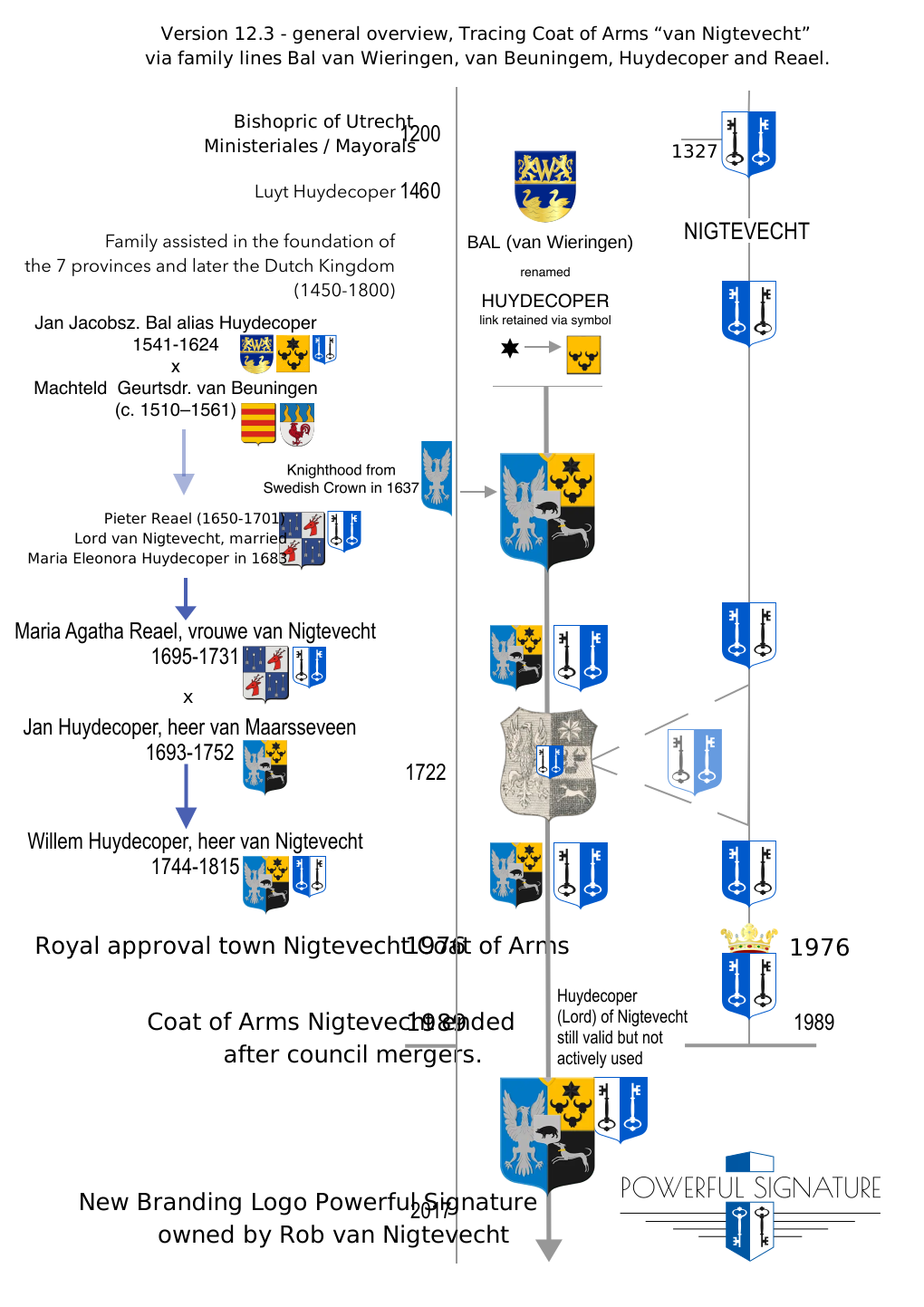
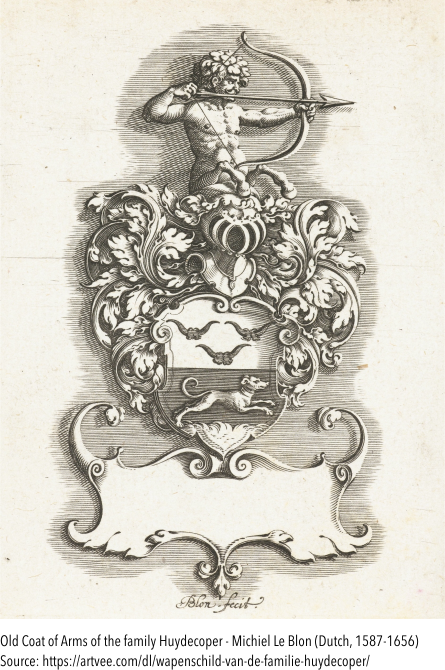
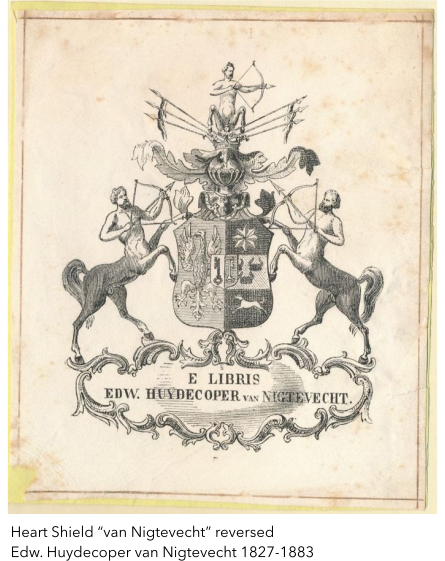
Tracing more details
Each time I find more details I amend the overview. The timeline of my own family, all the way back to the 1500's seems partially lost, or is still in records no one checked. It does not help that most of the fathers were given the same first names and that records were kept in times when invaders burned down the town. We only know our origin was in the place Nigtevecht. The oldest traceable ancestor was from around 1620. The ones before this, 1500 to ~1620, are not documented on the web. There is no link to a possibility they used the coat of arms representing governing the local area as mayoral, but there still may have been a nobility acting on behalf of the Bishops of Utrecht.
Today the Huydecoper family has still the right to use the name "Huydecoper van Nigtevecht" but this seems for practical reasons not used as it denotes "Huydecoper Lord of Nigtevecht" while there is no active Lordship over the area of Nigtevecht. The Coat of Arms Nigtevecht is most likely still their privilege. The question is then if this is the white-blue format, or the blue-white. Maybe the knowledge is lost or not so relevant because after the early death of "Maria Agate Reael Hydecoper, woman of Nigtevecht", her husband married again. Today the coat of Arms has in the center "Lord of Maarsseveen".
"Huydecoper Lord van Nigtevecht" was a Lordship title (in Dutch: "Heerschap") and also a knightly title (Jonkheer, Young Lord). The later published title under the larger coat of arms reads: "The Liberties of Edw Huydecoper van Nigtevecht", rather than "The Liberties of Edw Huydecoper Lord of Nigtevecht", though this may be equivalent due to heraldic title usage.
Trace the origing of the title knighthood and then Lordship titles "van Nigtevecht" is difficult. After a lot a tracing I discovered that the tile "Nigtevecht" "looped" between two families, from Huydecoper to Reael, and back to Huydecoper.
In short I was able to get a reasonable overview based on parts found via Google AI.
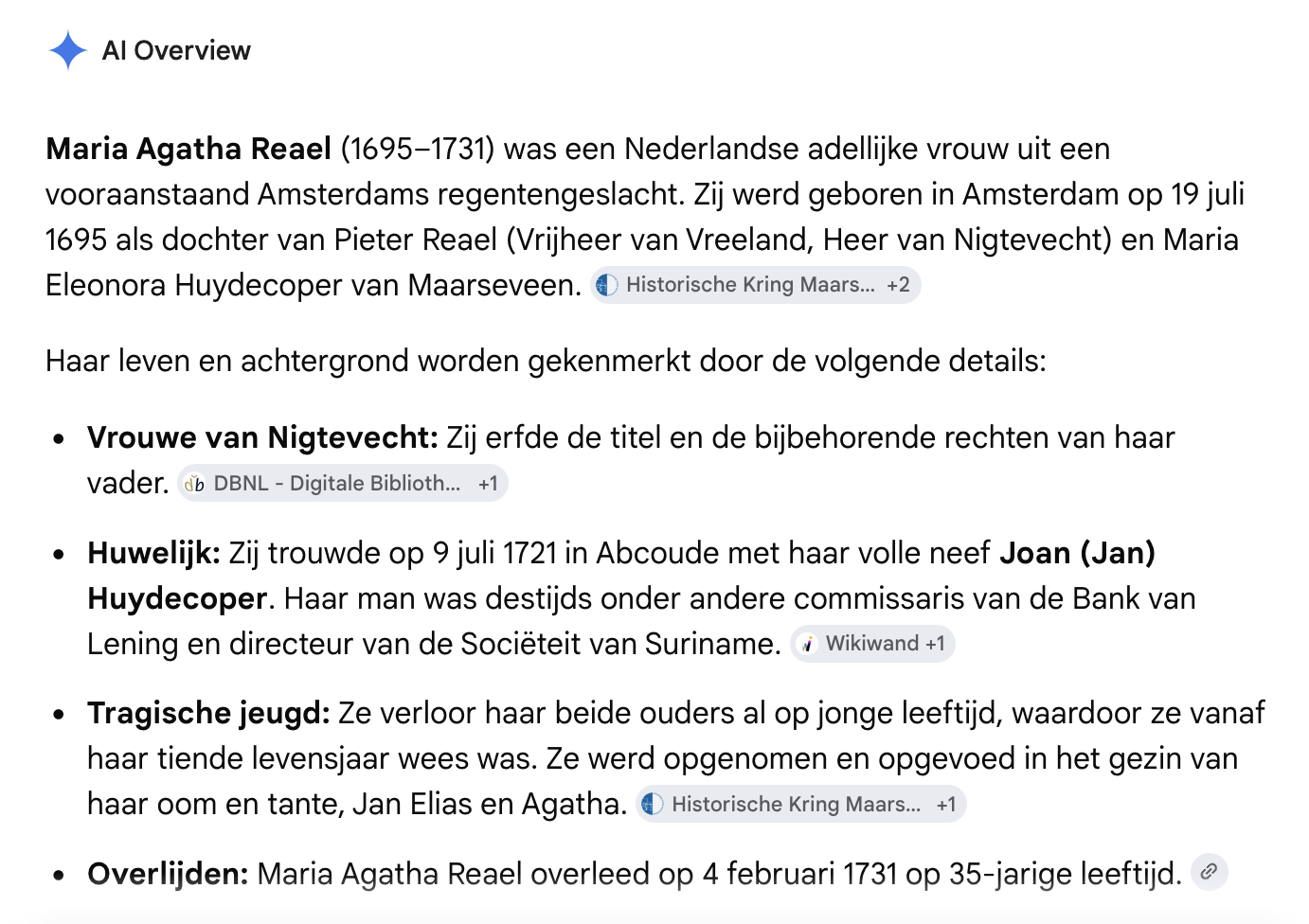
Pieter Reael, who was a grandnephew of Laurens Reael, stayed in the Netherlands, married into the Huydecoper family, and the became actual Lord of Nigtevecht. Pieter Reael married a daughter from the Huydecoper family in 1683, after which their own daughter returned the title of "Nigtevecht" in 1721 to the Huydecopers. Because Pieter Reael and Maria Huydecoper no male heirs transferred who retained the title, their daughter Maria Agatha inherited Reael the title "Lady of Nigtevecht" She married in 1721 with her cousin Jan Huydecoper. This led to the title (and the name) "Lord of Nigtevecht" finally in the Huydecoper family.
After this at some point the coat of arms was used in the Town on a building during the period the Huydecopers acquired greater powers over the area. It still does not resolve how the mayoral title, or later knighthood, "van Nigtevecht" ended up in the family Huydecoper somewhere after the 1500's. The actual acquisition of mayoral and knighthood title "van Nigtevecht" must have happened between 1500 and 1600, in the chaotic years when the Union of Utrecht emerged (1579). The noble title of Lord of Nigtevecht emerged later in the family as a Dutch knighthood.