Designing Pens

Designing Pens
Designing Pens
Handmade Fountain Pens
"High quality designer pens are appreciated writing tools despite the overall decline of using fountain pens."

The luxury of writing

Writing is still for many a way to express style, uniqueness, and personality, especially with a fountain pen. Signing important documents is still done with designer pens on high-quality paper by presidents, royalty, wealthy business owners, solicitors, and registrars, as well as by people who appreciate the luxury and art of writing. The writing style reflects the personality of the writer and signer, often deliberately chosen with a specific colour and line width. Recently, this was exemplified by President Trump’s bold, large signature, while former President Biden used the impersonal auto-pen. Both signatures reveal something about the administration’s character.

A new generation is using fountain pens to draw rather than to write, creating marvellous large-scale doodles as an escape from the restless digital world.

After the collapse of the fountain-pen industry, a few artisans began making fountain pens again, expressing their own designs. Some create truly stunning objects that are more like art than tools. High-quality fountain-pen design is usable art and should not be confused with kit-making, which often uses cheap imported parts from China.

Fortunately, there is still plenty of stock, though some is no longer produced. Rare stock is sometimes found in sheds or storage areas, with prices ranging from £100 to £1000 for just 12 inches of material! The most expensive stock is usually paired with special high-value nibs, often bespoke. Another highly sought-after style is Maki-e or urushi, with prices varying from £3000 to that of a luxury car. There remains a large market for fountain pens as personal statements, preferred writing instruments, collector’s items, or even investments. The most expensive pen ever sold is the Tibaldi Fulgor Nocturnus, at $8 million.

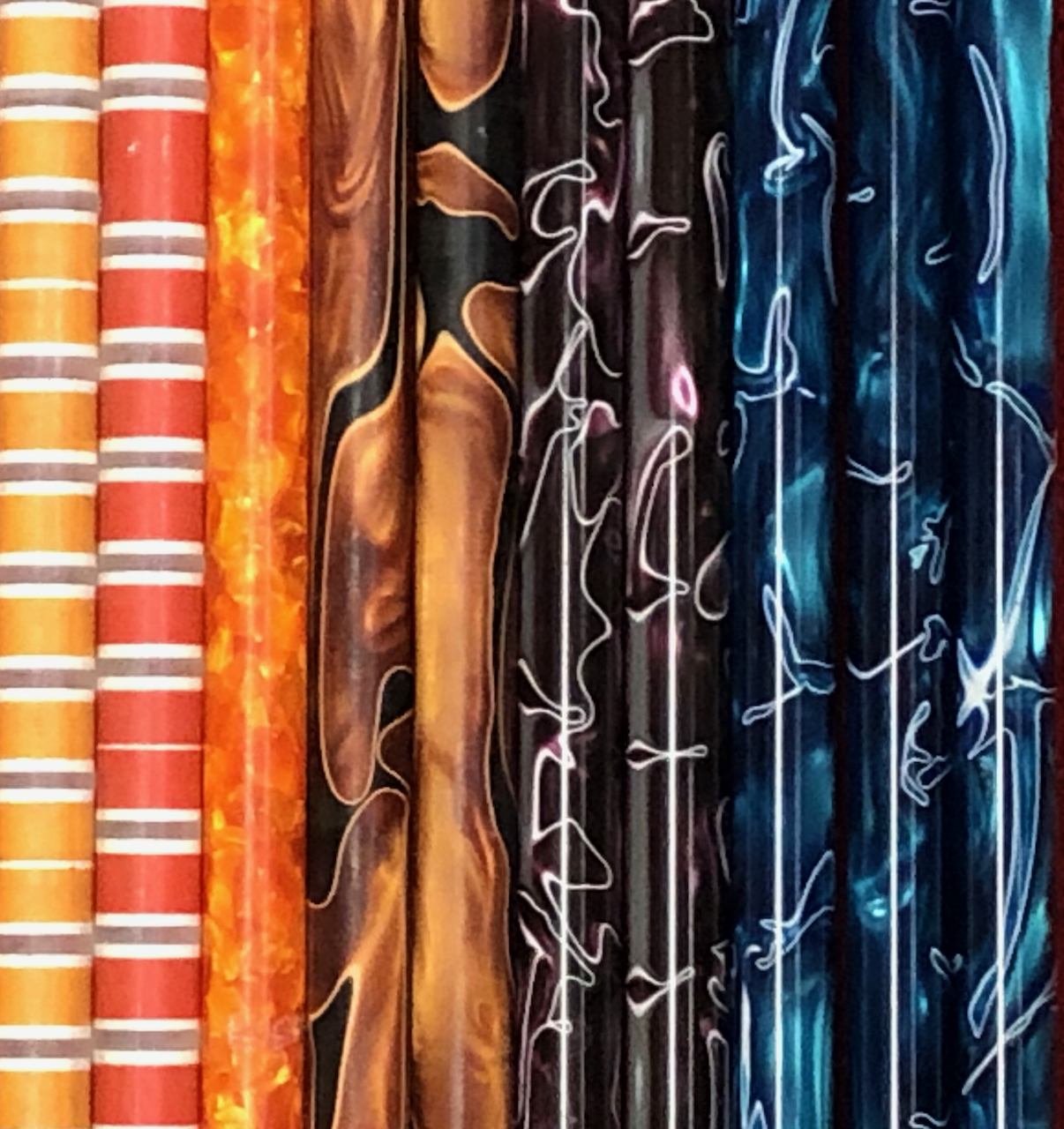
Colourful stock
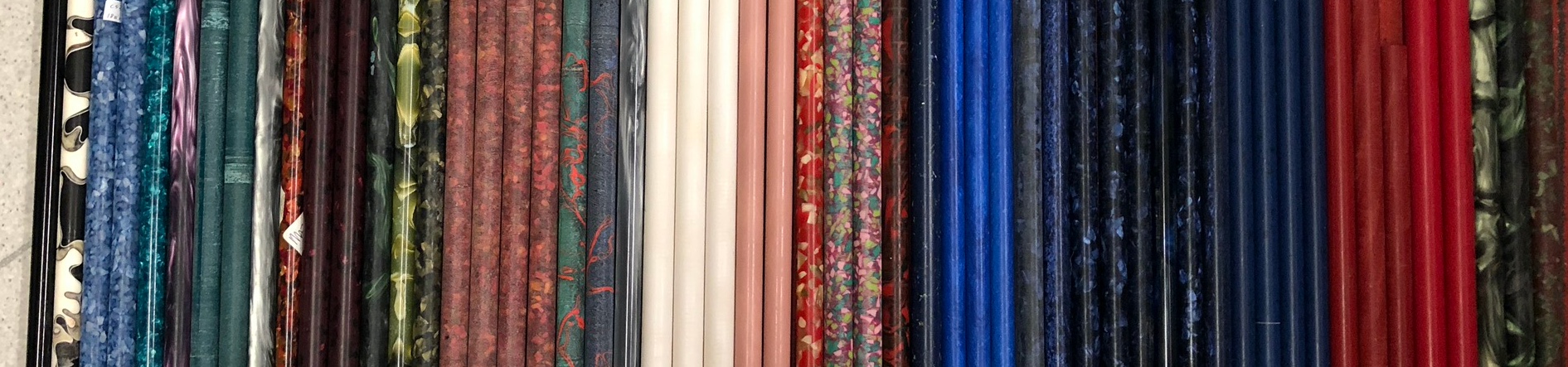
Lots of different stock
Pen Body material

PEN-BODY MATERIALS

The variety of materials used for pens is enormous, from wood and metal to plastics and resins. I use a small number of high-quality materials for my pens, known as Conway Stewart, Omas, Erinoid, and Casein. The latter is a polymer made from milk. It is a wonderful material but not as durable as modern resins. These are all premium materials that are excellent for fine threading and assembly via compression rather than glues. These materials are types of PMMA.

There are many other materials I do not use, such as expensive ebonite, which requires caution due to health risks during machining as it is vulcanised hard rubber and carbon-based. Another very expensive material I avoid is celluloid, which is lovely but can catch fire or even explode on a lathe. It is also not durable; over time it deteriorates due to chemical reactions, becoming brittle—though this may take 50 to 100 years.

The materials I select prioritise durability; I want the fountain pens to last more than a lifetime. The nibs and converters are standard and easy to obtain, making DIY replacements straightforward. Jowo nibs are very good and affordable, and they also offer high-end gold nibs. Schmidt converters are a reliable standard. I expect these companies to remain for a very long time. By default, I use Jowo duotone #6 medium nibs, with a range of other nibs available, and Schmidt K5 converters.

PHI
PHI math
tubes
Designing Fountain pens

Designs

I create my own distinct styles for those seeking something truly different and unique—to feel inspired, to impress, and to enjoy.

Over time, I developed my own methods for crafting pens, sharing my passion for beautiful, usable artwork. Much of the work involves rediscovering lost skills.

My pens measure 14 to 15.3 mm in diameter and usually 137.5 to 140 mm in length. After two years, I learned to assemble them without glue, held together purely by compression and containing up to 25 parts. I occasionally use shellac for small inserts.

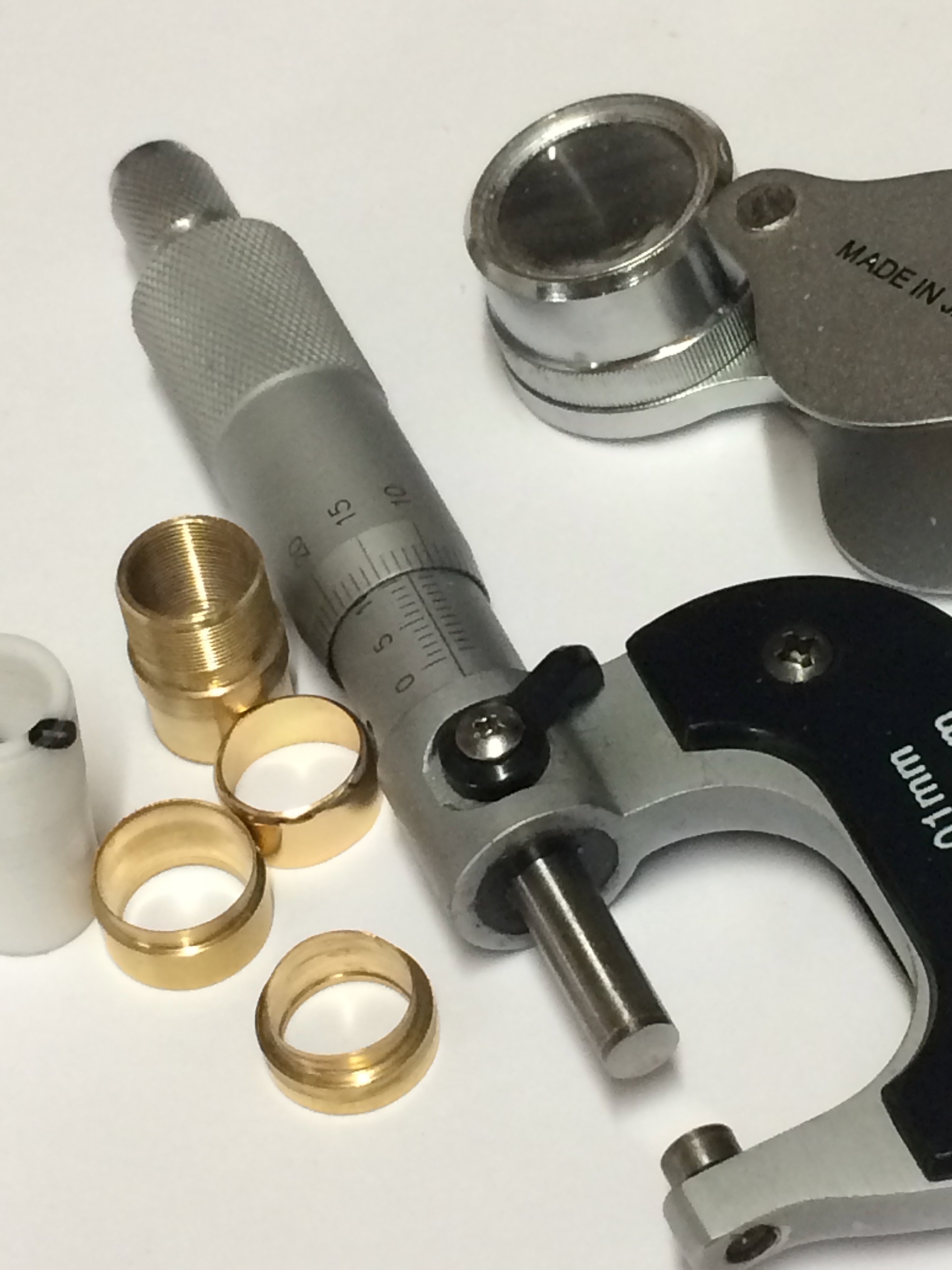
The metal decorations are turned by me on the lathe and, whenever possible, held on the pen by compression alone. This requires working to a tolerance of 0.05 mm so friction keeps everything securely together.

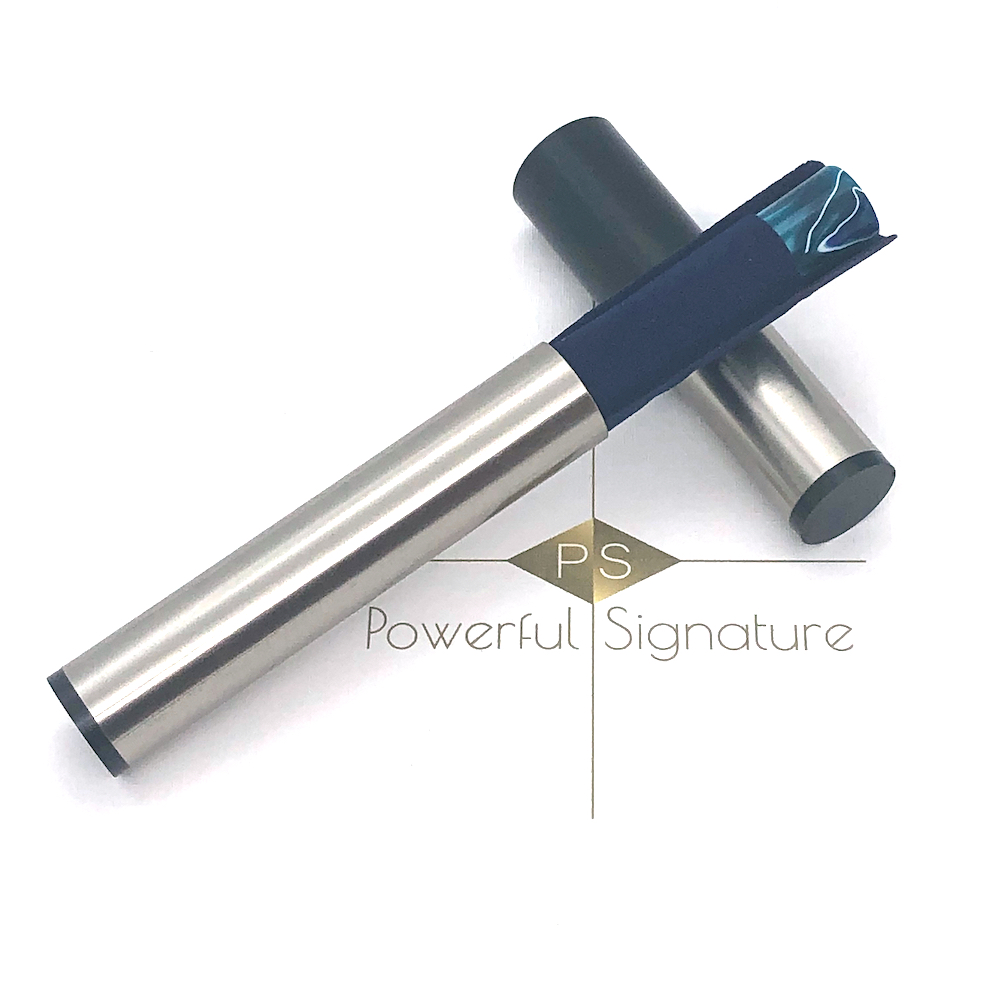
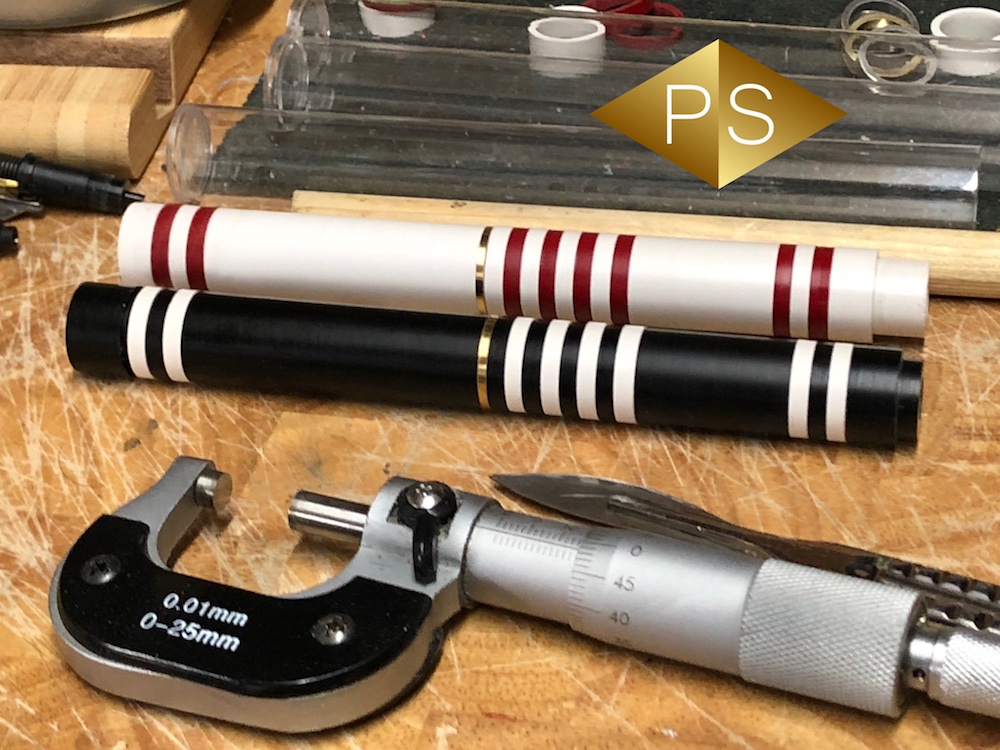
I make the pen tubes myself; they fit perfectly and serve as a practical carrier. I do not provide luxury pen boxes, which often end up forgotten in a cupboard. A pen tube is more sensible and ecological. Since June 2023, due to rising costs, pen tubes are no longer included and must be purchased separately. But I may change this back to an included product as soon as possible.

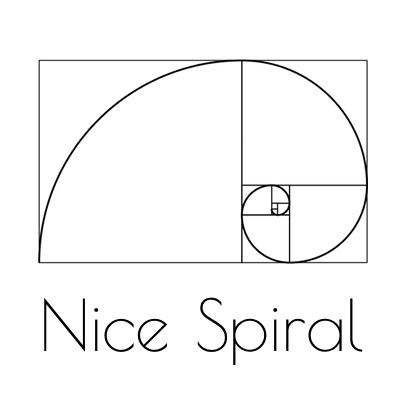
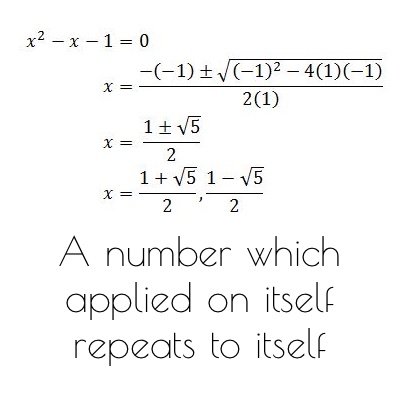
One key feature of my designs is the use of the golden ratio (phi) and a set of base numbers as a foundation. Phi makes it easier to achieve a visually pleasing balance between parts, and experimenting with these proportions is enjoyable.

I specialise in robust designs that highlight the wonderful textures and colours of precious materials. Creating a fine product involves much experimentation—listening, sensing, feeling how the material cuts, even noticing its smell.

My current designs have no clips. I am developing my own roll stoppers and other decorative metal elements on top of the pen body, in addition to the usual embedded rings and wire designs, but these are still in progress. Pens are made as unique one-offs or in small series. Each is handmade and sold as a unique piece, even when part of a small edition.

I am always exploring new ideas and striving to create something truly original, which is challenging given the tens of thousands of pen designs worldwide. It’s remarkable how many variations can be created from such a simple object, yet there is always room for a few more.

Handmade, no mass production
Products are made in small batches. I keep only a few in the webshop and make most on demand. This allows me to respond to actual demand and maintain a more ecological approach.

nfc additions
Certificates

Certificates and Provenance

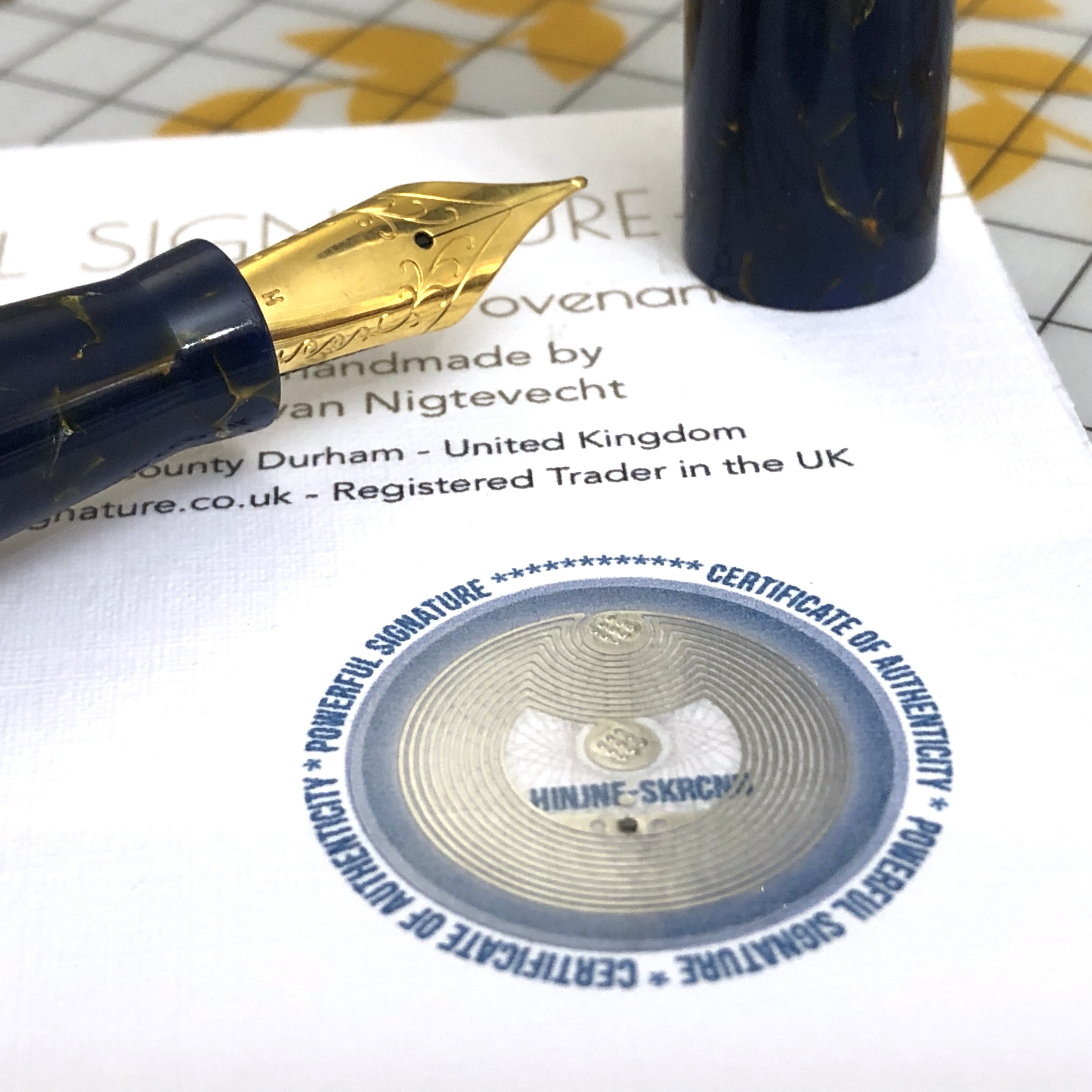
From 1 Sept 2021 I add a nfc tag in the pen and on the certificate used for authenticity and provenance. 
This can be checked on the NFC Pen Certificationpage

Reselling to someone else:
Provenance only works when the link is not broken. Be sure to have a reference back to the previous owner on the certificate.

Older Certificates.
The certificates page for paper certificates issued before January 2020 are no longer used. Requests for a new authenticity/provenance certificate can be submitted via the contact form. I will then contact you by email and ask you to send an image of the certificate showing the SKU number and model.