

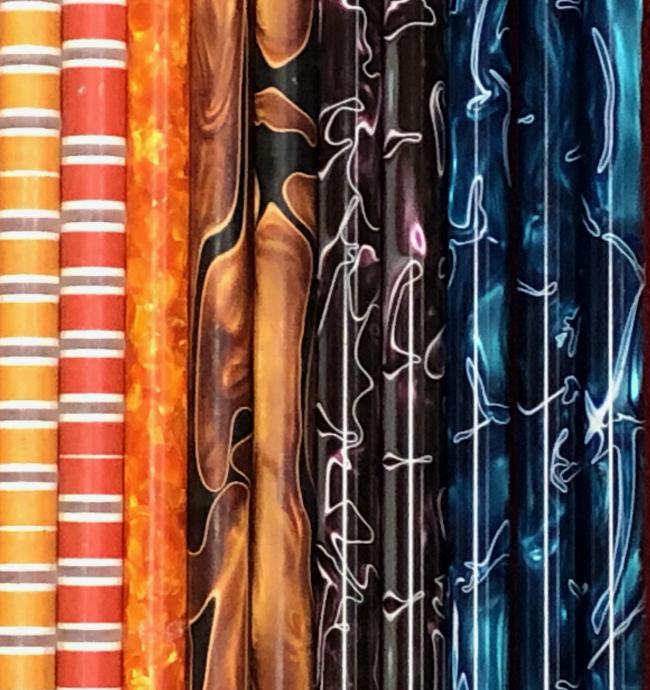
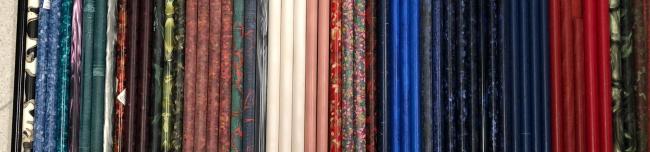
PEN-BODY MATERIALS
The variety of materials used for pens is enormous, from wood and metal to plastics and resins. I use a small number of high-quality materials for my pens, known as Conway Stewart, Omas, Erinoid, and Casein. The latter is a polymer made from milk. It is a wonderful material but not as durable as modern resins. These are all premium materials that are excellent for fine threading and assembly via compression rather than glues. These materials are types of PMMA.
There are many other materials I do not use, such as expensive ebonite, which requires caution due to health risks during machining as it is vulcanised hard rubber and carbon-based. Another very expensive material I avoid is celluloid, which is lovely but can catch fire or even explode on a lathe. It is also not durable; over time it deteriorates due to chemical reactions, becoming brittle—though this may take 50 to 100 years.
The materials I select prioritise durability; I want the fountain pens to last more than a lifetime. The nibs and converters are standard and easy to obtain, making DIY replacements straightforward. Jowo nibs are very good and affordable, and they also offer high-end gold nibs. Schmidt converters are a reliable standard. I expect these companies to remain for a very long time. By default, I use Jowo duotone #6 medium nibs, with a range of other nibs available, and Schmidt K5 converters.