Coat of Arms Nigtevecht

site logo origin
heraldic history nigtevecht
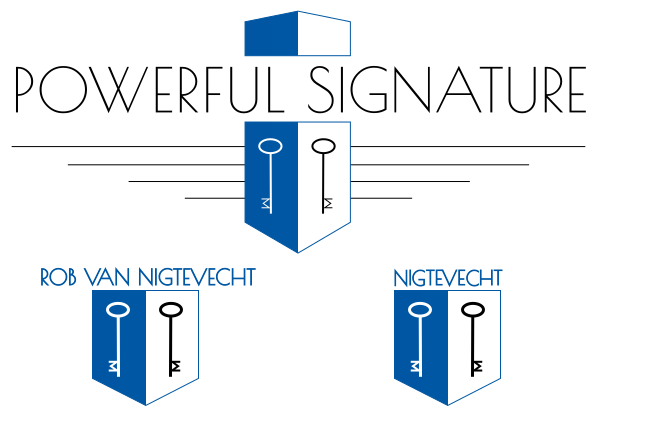
Background of the Powerful Signature Logo

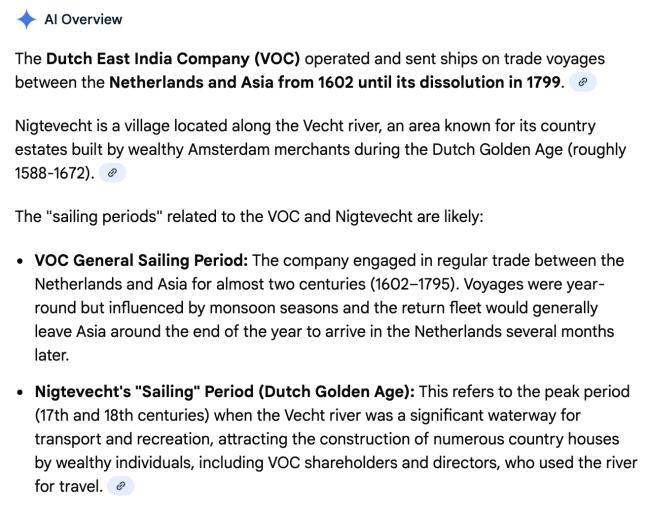
The logo is a variant of the ancient Coat of Arms of Nigtevecht, a former Dutch municipality, as a reference to my family name "van Nigtevecht". 

In the 1990s, I saw an old drawing of the coat of arms with the keys pointing down, described as a very old version no longer in use. Whether true or not, I have since used this unconfirmed ancient version with "NIGTEVECHT" and keys pointing down, out of respect for the original design used by the family "Huydecoper, Lord of Nigtevecht" and the formerly royal acceptance of the municipality's coat of arms. The coat of arms fell out of use after a municipal merger in 1986.

In 2019, I began using this version with keys pointing down as the site logo, together with the name "Powerful Signature".

The following articles are just some interesting and peculiar backgrounds about the Coat of Arms and family names, the history of the areas and some curious histories. In the 90s I saw a Coat of Arms of Nigtevecht with the keys pointing down; it was mentioned as an "ancient version". This information was around 2000 on the web, but no longer available. If anyone still knows where to find it, please let me know!

The Coat of Arms still exists above the door of the former town hall (Raadhuis) at Dorpsstraat 142 in Nigtevecht.

Nigtevecht shield in center
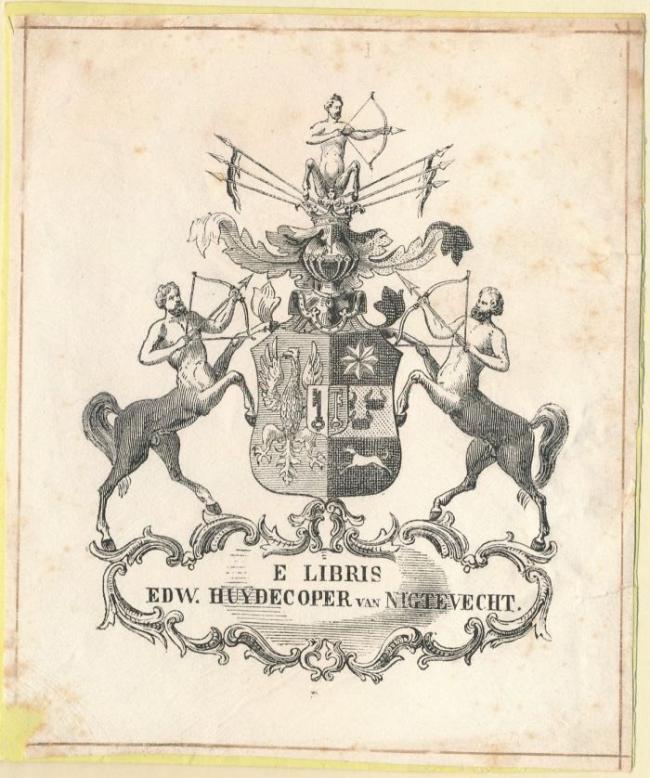
coat of arms Huydecoper
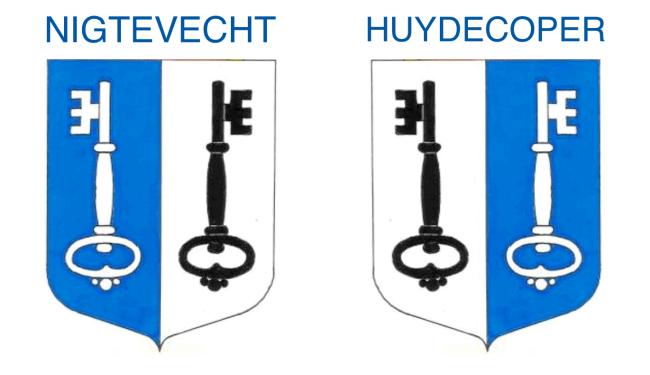
Swapped Coat of Arms
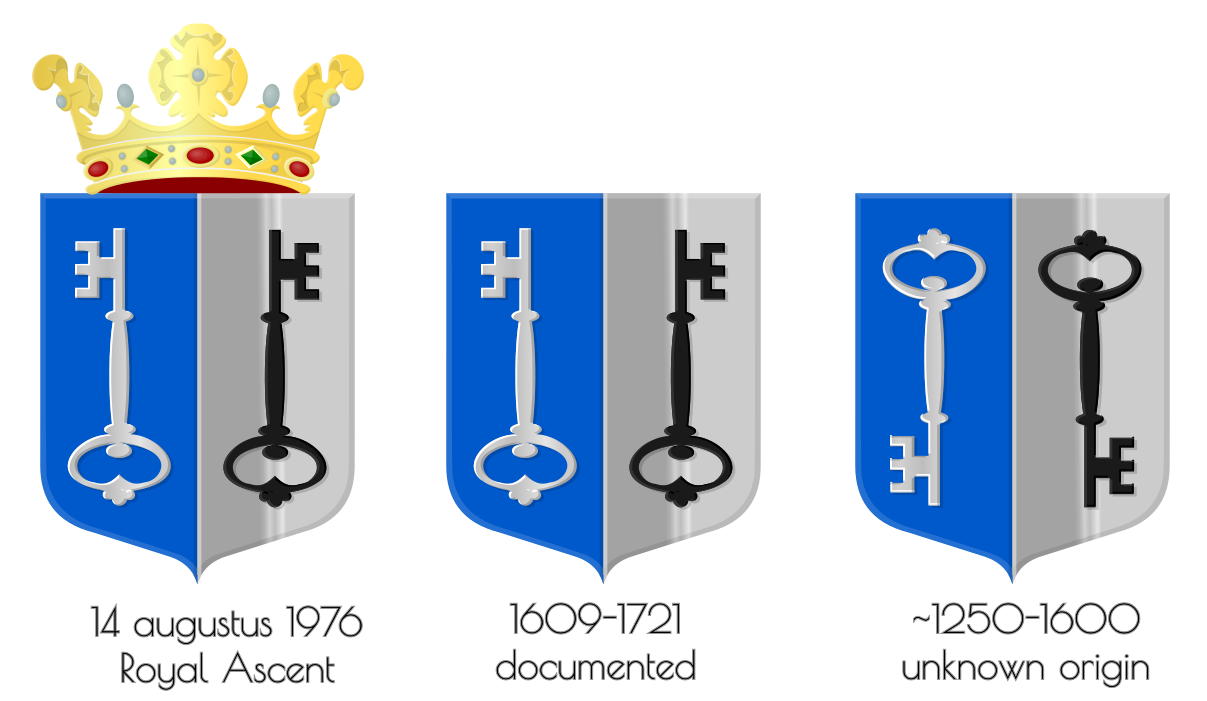
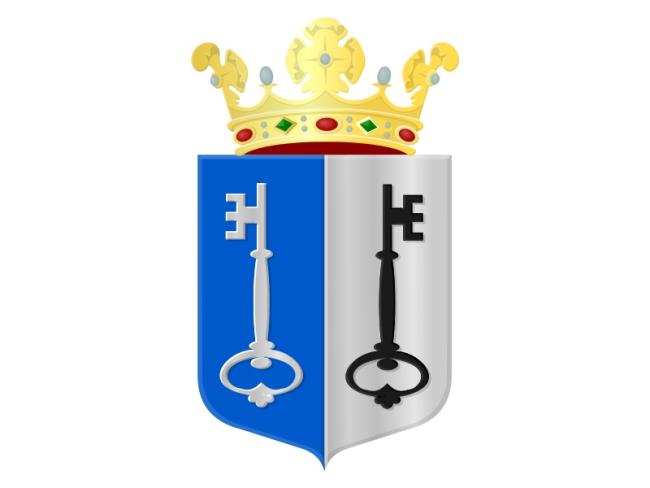
Weapon of Nigtevecht with Crown
Origin of the Nigtevecht coat of arms

The original coat of arms of Nigtevecht, using blue and white, seems to date back to the 1600s. The coat of arms with white and blue was used as a heart shield on the Huydecoper van Nigtevecht family coat of arms since 1721.

An unconfirmed story claims that when two families merged through marriage, they had the same colours but in opposite order. I found no evidence for this. However, there was indeed a dispute over the colours, eventually settled as blue-white. I found no record linking "Huydecoper Heer van Nigtevecht" (the Lordship) or "Huydecoper van Nigtevecht" as a connection between two families. It is unclear how the name "Huydecoper van Nigtevecht" emerged as a full name in some records. It was originally a lordship title (in Dutch: "Heerschap") and also a knightly title (Jonkheer, Young Lord). The title under the larger coat of arms reads: "The Liberties of Edw Huydecoper van Nigtevecht", rather than "The Liberties of Edw Huydecoper Lord of Nigtevecht", though this may be equivalent due to heraldic title usage.

It is clear that the Huydecoper family used a coat of arms with the left side blue and the right side yellow above black, pointing to the “Huydecoper van Nigtevecht” title. The family acquired the Lordship of Nigtevecht in 1721 and added the white-blue coat of arms, the opposite of Nigtevecht’s blue-white coat of arms. The origin of these variants is unclear. It is not entirely clear what happened; historical details may be unreleased or hidden in undiscovered archives.

The coat of arms with the crown was registered in 1950 and officially granted on 14 August 1976. After the merger of municipalities, this coat of arms was abandoned in 1986. The original Nigtevecht coat of arms may still be visible in the village of Nigtevecht on an old building. There is also an old fort called Nigtevecht, built in 1903 as part of the Defence Line of Amsterdam. It is a small village but with an interesting and important history.

The symbols of Coat of Arms Nigtevecht

Left blue means "science and truth"

Right white or silver means "loyalty"
This is also accoridng other sources a refrence to water.

General meaning of the keys is "power to unlock and unlock"
This expresses power over the faithful, derived from the religious origin of the Keys of Peter, but according to an official heraldic page it means "trust, silence, helpfulness". Other sources also suggest meanings such as "authority, stewardship, security, and the power to unlock or bind", while keys pointing down specifically can add nuances like "humility, readiness for use, or a lower/base position".

The Crown is a sign of dignity and aithority which was granted in 1976 but no longer in effect.

Origin of the Name Nigtevecht
The Name Nigtevecht

Old Dutch for Nigtevecht was Niftervecht, which seems to mean "aan de Vecht" or "at the Vecht". But Nifter has a broader meaning, like "near" or "bend" (Dutch "bocht"). Old Dutch and English share similarities; you can hear it in "nigh" and "to the River Vecht", hence "nigh to the Vecht". The town name dates back to 1281, when Count Willem IV of Holland granted Vecht farmers the right to dam the river and use the water to irrigate their land. There was a Roman fort called Castellum Fectio at Vechten near Utrecht, built by Drusus between 12 BC and AD 39. At that time, the river branch with the Rhine ran through the centre of Utrecht. The river seems either to have been named after Fectio or the Fort after the river or the Fort after the river. Dutch Archeological PDFhas more details about Castella Fectio, later called Feht or Fehtna. After the great flood disaster of 1200 the river was recorded as the Vecht. The area was Frisian from long before the Romans until around 600, the language shares a common ancestor known as Old English or Anglo-Frisian. This is also why Nigtevecht sounds so close to Nigh-to-the-Vecht. And in Frisian the children are "de Bens", Dutch "kerk", the Scottish "kirk". But some of the similar words are also introduced by Vikings during invasions. The Frisians were hired to fight along Hadrian Wall indicating that some Frisian words are "borrowed" from this time. Before this time there was also an extensive trading activity (the Gaelic or "celtic" cultures and the "Hallstadt" period which was at the time of Nebuchadnezzar, Daniel and Ezekiel, found in the Bible). It is only thanks to the Romans and Greek that we know something of this time via their written records. The northern cultures used oral traditions so we can only rely on archeological findings. A culture without writen records is easily lost in the mist of times.

The town Nigtevecht is small. The French wrecked the village. It regained its position in the wider area owned by nobility and royals, known as “the royal land jewel”. Peter the Great visited here. There were large houses and land owned by the nobility. According to the kerknigtevecht.nl website, there was a place called “Petersburg”, a princely “landjuweel” on the Vecht. The name was taken from Tsar Peter the Great, Emperor of Russia, who visited this area several times during his stay in 1717. The Lordship of Nigtevecht was a significant title being responsible to be the caretaker of this area.

It is possible that the name "van Nigtevecht" originates from the time of the ministeriales"Reclamation of the peat lands" who as mayors were part of the knighthood but not the nobility half way the 12th century, during which they served to manage the area. Mayors took names like "van Breukelen", "van Maarsen" etc as mentioned in the article, and their descendants were part of the knighthood. This is where the name "van Nigtevecht", and it's variations, may have started. My name comes from this place, but it is highly unlikely there is a direct link to the "Huydecoper van Nigtevecht" family, unless someone married into it and took the name "van Nigtevecht" via the male line. In that case, the female name should have been recorded as "van Nigtevecht Huydecoper", which I have not found anywhere. That said, registration among commoners was inconsistent and relied on church archives, many of which were destroyed by invading armies or lost in fires. It did not help that Catholics from the south and Protestants from the north of Holland plundered the town extensively. 

It seems Google AI confuses things a bit—it would be wrong to rely fully on AI results when seaching on the family name histories. There are families with the full name “Huydecoper van Nigtevecht”, families named just “Huydecoper”, and families named “van Nigtevecht”, sometimes with variants like “Nichtevegt” or “Nigtevegt” after “van Nigtevecht” to indicate they may have used differently spelled names. It is even possible that a descendant “van Nigtevecht” has an ancestor named “van Nichtevegt” or “van Nigtevegt” while also one took it as an title based on their place in society.

Perhaps a few branches split off from the ministeriales who became mayors, confusing the origins for others who also took the village name “van Nigtevecht” just as a name, which was very common.

Napoleon further complicated matters when he invaded Holland and forced people to adopt fixed surnames instead of descriptions like "Gerrit, son of the baker in Weesp, brother of the miller in Muiden". The name "van Nigtevecht" is linked to "Huydecoper" as a noble title; there is no record indicating otherwise. By the time Huydecoper took on the rsponsibilities for "Nigtevecht" as a Lord, the original descendants of the ministeriales who became mayors had already vanished.
Within a noble family, the title was typically passed only to the eldest son. A similar inheritance existed among ministeriales who became mayors. Some genealogy websites list the full surname as "Hudecoper van Nigtevecht" even for those not part of the nobility, while others were. Some are recorded simply as "Huydecoper" even when linked to the noble family. Only a few carried the lordship or "Sir" title. The Family Huydecoper has many decendants who are form within the Nobility, even one from Britain.

This is a sample of the Huydecoper family at ( source hallet.nl ) making a distinction between Huydecoper with a nobel title like adding "Lord of Nigtevecht", and those without. "They are an Amsterdam mayoral and patrician family. Several members held administrative positions as directors of the Dutch East India Company (VOC) and Dutch West India Company (WIC), the admiralty, and the state. However, it began with extensive merchant activity, and the various in-laws all have a trading past. In 1814, Jan Willem Huydecoper was appointed to the Knighthood of Holland, and thus he and his descendants became members of the Dutch nobility." Interestingly, they used blue on the left side on their Coat of Arms.

The name Nigtevecht became part of Huydecoper through the lordship of Nigtevecht. Within the Huydecoper family, many were merchants, bankers, lawyers, even a consul, and at times held positions at the Dutch royal court, likely due to their wealth, power, and education. Records related to "the forgotten Anglo-Dutch War" mention "Jonkhheer Hudecoper van Nigtevecht", which is more akin to "Sir" than "Lord".

I was able to trace the name "van Nigtevecht" back to the early 1600's by the name of Claesz Jans Van Nigtevecht, found at ( source genealogy.com ). But for some reason there is a missing link between my great-great-grandfather and the family back to Claesz Jansz. There is a gap of almost 200 years. This may be due to birth and burial records not yet found, or lost in religious and national wars, perhaps also in accidental church fires.

Most of the van Nigtevecht family lived at the time in Loosdrecht, Weesp, and Breukelen, and a few in Amsterdam, all close to the area of Nigtevecht itself. Note that "van" was used to mean "coming from". It is quite possible that different families with the name "van Nigtevecht" exist but are not genetically related.

Post Stamp Nigtevecht
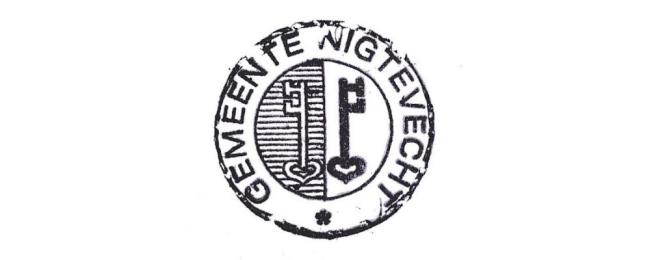
Round Post Stamp Nigtevecht
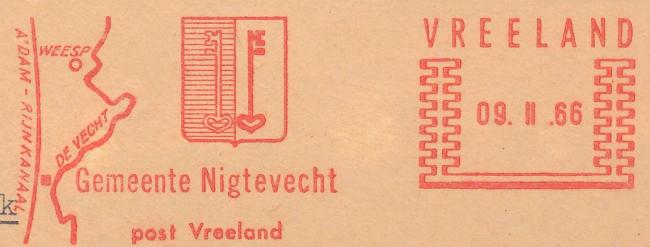
Post stamps with coat of arms Nigtevecht

Post stamps with the coat of arms Nigtevecht
Yes they exist also, it was used by the post office of the village Nigtevecht, ( source heraldry-wiki )

Hostory VOC Ship Nigtevecht
The VOC Vessel Nigtevecht

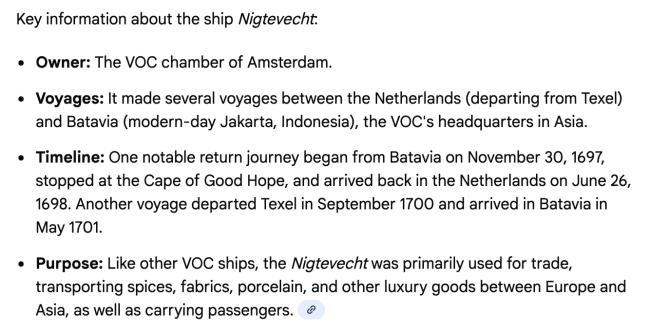
A ship named the Nigtevecht was a Dutch East India Company (VOC). Sadly, no old painting of this merchant vessel survives; it must have been very impressive. They also found an ancient logboat from 700–600 BCE in Nigtevecht. A pre-Roman era shipwreck (logboat) near the modern village has been cataloged under the name Nigtevecht. The merchants of the VOC had large houses and much land in the area of Nigtevecht, they represented the great wealth in Holland under control of a Republic, before the United Kingdom raised in power.  Nevertheless, the House of Orange fullly controlled the VOC. The VOC period was the era where also Prince William III became King of England,

The fogotten war
The Forgotten Anglo-Dutch war

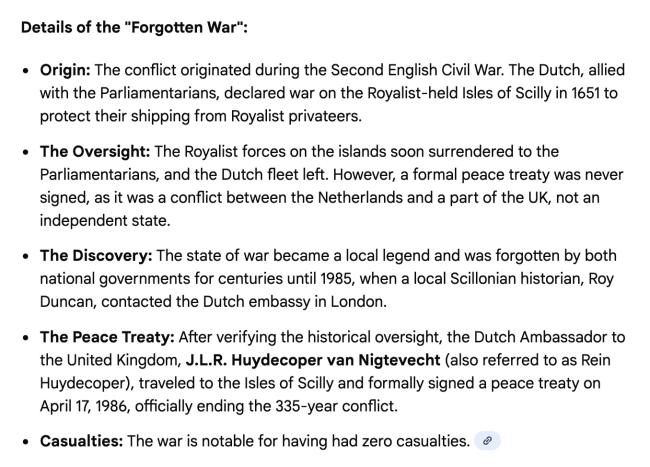
This is another curious history related to de "Huydecoper van Nigtevecht " family about a forgotten war, a page on ( vlagblog.nl -Scilly Isles )mentions the following: 

"In 1986, a symbolic peace treaty between the Isles of Scilly and the Netherlands was signed by Dutch ambassador Jonkheer Rein Huydecoper van Nigtevecht. This event ended a 335-year conflict, formally declaring peace centuries after the last Anglo-Dutch War had concluded, though a formal peace had apparently been overlooked."

There is also an explanation on the website of how they discovered the forgotten war in 1986:
"Roy Duncan, historian and chairman of the Isles of Scilly Council, wrote to the Dutch embassy in London to dispel the myth that the archipelago was still at war with the Netherlands. The embassy investigated and concluded that the myth was indeed based on truth (Whitelocke's letter)."

The 335-year war ended with zero casualties, a unique achievement. The absence of any deaths may also explain why it was forgotten in a corner of Britain. There was no formal declaration of war, and the peace went unnoticed. England was in turmoil during the Cromwell period and had other priorities. I think "The Long Boring Anglo-Dutch War" would be a more appropriate title!

You can read the full history on the vlagblog website; you have to translate the page to English. Really a nice piece of history! The name is mentioned on this site in full as “Huydecoper van Nigtevecht”, not “Huydecoper Lord of Nigtevecht”, as on the larger family Coat of Arms.

VOC Nigtevecht
VOC Vreeland
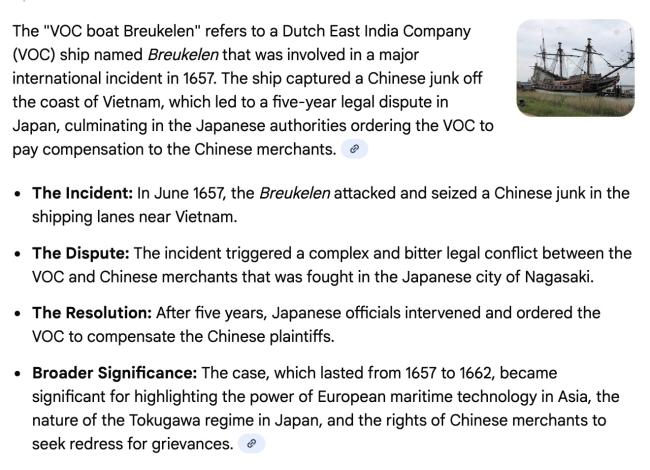
VOC Breukelen
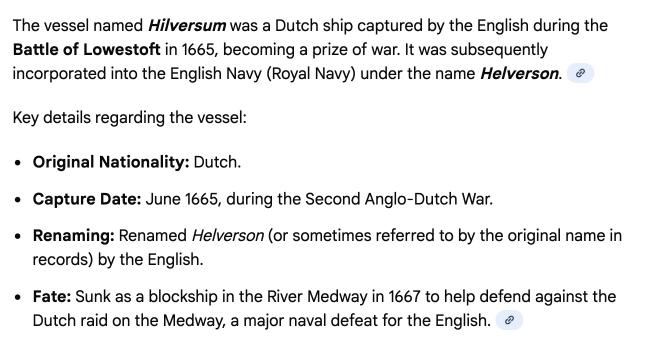
Hilversum Vessel Captured by the English
Unconfirmed histories

There were stories about the family being tax collectors in the municipality of Nigtevecht, but I have never found proof of this. It is, however, possible that the Huydecoper van Nigtevecht family had certain rights, freedoms, and duties related to raising taxes in the area as "Lordship of Nigtevecht" from the Dutch "Heerschap". Hence the description "Huydecoper Lord of Nigtevecht" or "Huydecoper Lordship of Nigtevecht". Dutch titles can be confusing in English, as they have changed over time. The use of the Dutch "Heer" can also be confusing; it depends on context.

heer / mijnheer = mister, common use of sir
Lower nobility title "Heer" or "Jonkheer" = Young Lord, but often used as Sir
High nobility title "Heer" = Lord, Lordship. (Also used in the Bible as Lord of Israel, Lord Jesus).

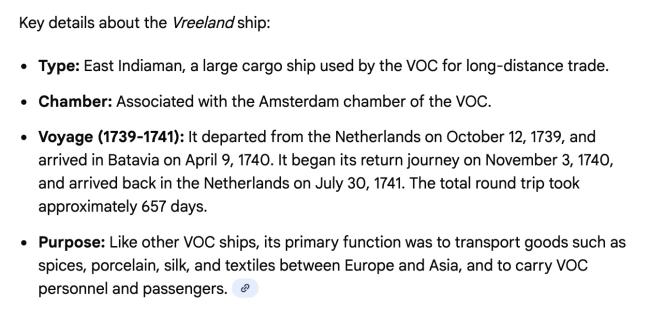
There are more stories associated with the name Nigtevecht for which I have found no proof. One of these is that a naval vessel called "the Nigtevecht" ended up in the fleet of one of the Kings of England together with a vessel called "The Vreeland". However, I found old records of ships loaned from the Dutch to English kings but no evidence of this, nor of them being seized by the English. This must be incorrect because VOC ships were merchant vessels, not naval ships. There were VOC ships called Nigtevecht, Vreeland, and Breukelen around 1650; this information is easy to find. There was also a vessel captured by the English Navy called the "Hilversum", which was then incorporated into the English Navy. Oddly, that bears the name of the place where I was born.

Tracing historical information

In the year 2000 I read a lot about the history of the "van Nigtevecht" family maintained by someone in Weesp with the same family name. The information on this personal website seems lost. I read a lot of details here with reference to archives no longer available on the web. It may be available within in old historical paper archives held by Dutch authorities and organisations. We have to remember that what's available on the web is only a small portion of all the historical documents. Much of the material can only be traced via extensive research visiting places and requesting copies, if allowed.

We think the internet can give us correct information, but this depends on what has been transferred from old paper archives, if not lost during conflicts. I discovered that even AI gives often the wrong information "reading" wrong, speculative or unverified documents. Converting all paper history is sheer impossible due to the enormous effort and excessive cost involved, but a lot has become available thanks to scanning and people's interest in genealogy.

Site Logo
Copyright